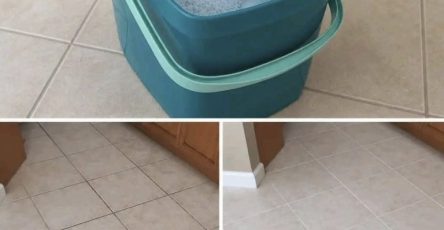

I used to think the secret to cleaner floors was using more water, more cleaner, and more scrubbing.
Then I tried one surprisingly simple trick:
Use a barely damp microfiber mop instead of soaking the floor.
It sounds almost too basic to make a difference, but after trying it, my floors dried faster, looked less streaky, and stayed cleaner-looking longer.
The best part? It works on many common floor types when done correctly.
Why Too Much Water Can Make Floors Look Worse
When a mop is dripping wet, the floor may initially look cleaner simply because everything is shiny.
But once the water dries, you may notice:
Streaks
Cloudy patches
Sticky residue
Dirt collecting again quickly
Water marks
Too much cleaner can create the same problem.
Instead of removing dirt, excess product can leave a thin film behind. That residue may attract dust and make the floor look dull again surprisingly fast.
The Trick: Use Less Water Than You Think
The method is simple.
Instead of soaking your mop, use a microfiber mop that is damp, not dripping wet.
The microfiber helps lift dust and grime mechanically, while the small amount of moisture loosens dirt without flooding the surface.
What You Need
A microfiber mop
Warm water
A bucket or spray bottle
A small amount of floor-safe cleaner, if needed
That is usually enough.
Step 1: Remove Loose Dirt First
This step makes a bigger difference than most people realize.
Before mopping, vacuum or sweep thoroughly.
Pay extra attention to:
Continued on next page (page 2)
Corners
Under furniture
Along baseboards
Kitchen areas
Entryways
If you skip this step, the wet mop can simply push dust and crumbs around the room.
Step 2: Prepare a Very Light Cleaning Solution
Fill a bucket with warm water and add only the amount of cleaner recommended on the label.
More cleaner does not automatically mean cleaner floors.
In many cases, using too much product is exactly what causes the sticky or cloudy finish people are trying to remove.
If your floor only needs light cleaning, plain warm water may sometimes be enough.
Step 3: Wring the Mop Out Really Well
This is the part that changed everything for me.
After wetting the microfiber pad, wring it out until it feels only slightly damp.
It should not leave puddles behind.
When you run the mop across the floor, the surface should dry fairly quickly.
Step 4: Work in Small Sections
Instead of mopping the entire room randomly, divide it into manageable areas.
Start in the farthest corner and work toward the exit.
Use overlapping passes so you do not miss spots.
If the mop pad becomes visibly dirty, rinse or replace it rather than continuing to spread grime around.
Step 5: Let the Floor Dry Naturally
Because you are using so little water, drying usually happens much faster.
Avoid walking on the floor until it is dry, especially in high-traffic areas where footprints can appear quickly.
Why Microfiber Works So Well
Microfiber cloth contains very fine synthetic fibers that are designed to trap particles rather than simply push them around.
That makes it particularly useful for:
Dust
Hair
Fine debris
Light grease
Everyday dirt
A clean microfiber pad can often remove more grime with less cleaning solution than a traditional string mop.
The Mistake I Was Making Before
My old routine looked something like this:
Fill the bucket with lots of water.
Add a generous amount of cleaner.
Soak the mop.
Mop until the floor looked shiny.
Wait forever for it to dry.
The problem was that the floor often dried with streaks.
Sometimes it even felt slightly sticky.
I thought the solution was more cleaner.
It turned out the solution was often the opposite.
Does This Work on Hardwood Floors?
It can, but hardwood requires extra caution.
Wood floors generally should not be saturated with water because excess moisture can penetrate seams and potentially cause swelling, warping, or finish damage.
Use:
A barely damp microfiber mop
A cleaner specifically approved for your floor
Minimal moisture
Never leave standing water on hardwood.
If your flooring manufacturer gives specific cleaning instructions, follow those first.
What About Laminate Flooring?