

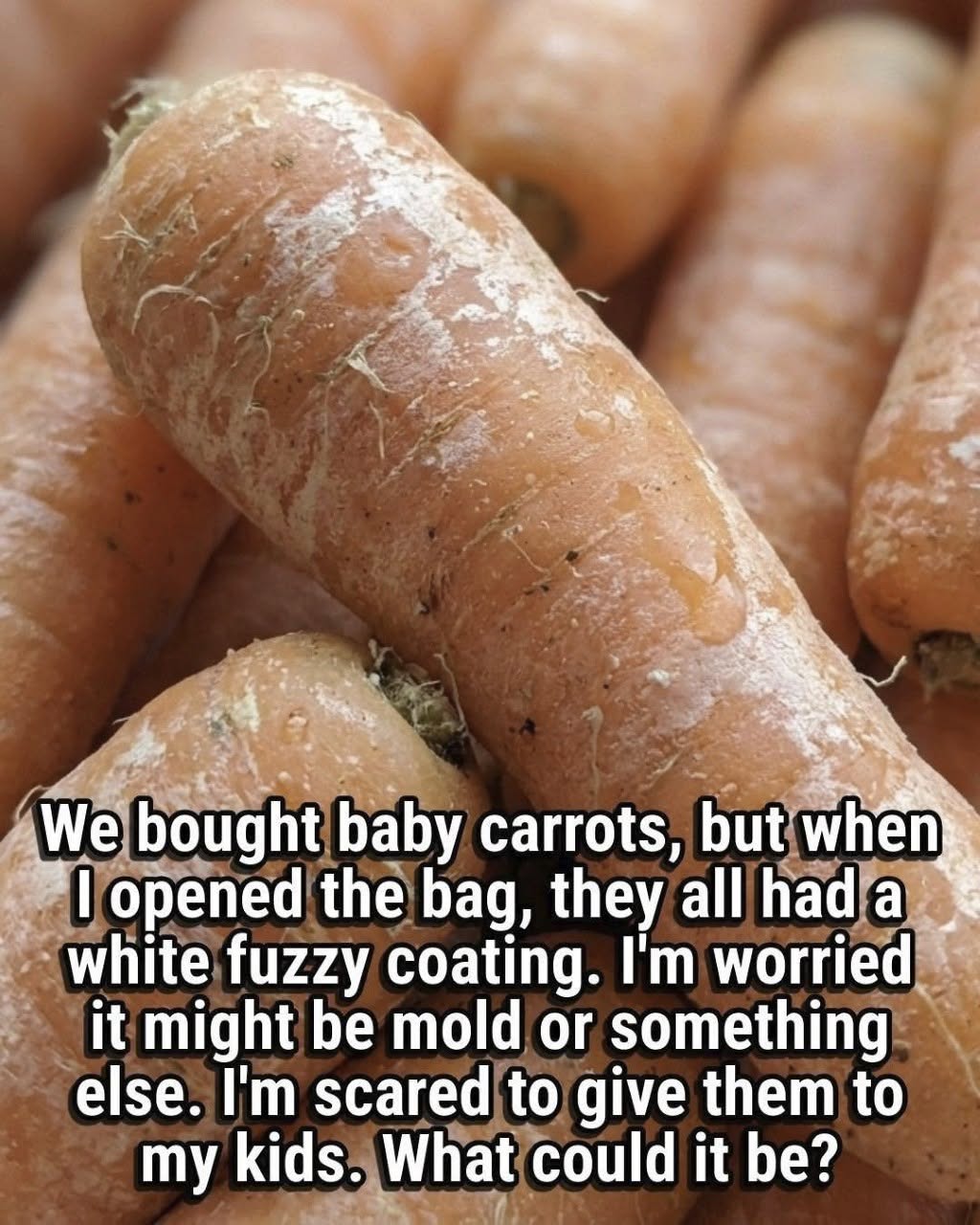
What the Fuzzy White Coating on Baby Carrots Really Is (And Why You Shouldn’t Toss Them)
Engaging Introduction
Fresh produce is expensive, and it’s extremely frustrating when you bring fruit and veggies home from the grocery store, only to have them go bad a couple of days later. When buying a bag of baby carrots, you may notice that before long, they become covered in a fuzzy white coating. And while many people (including myself) take this to mean that the carrots have gone bad, this isn’t actually the case.
I remember the first time I saw it. I opened a bag of baby carrots, reached in, and froze. The carrots were covered in a white, dusty-looking film. They looked… moldy. I tossed the whole bag in the trash, convinced I’d bought a spoiled product.
Then it happened again. And again. Every time I bought baby carrots, within a few days, that white coating appeared.
I assumed I was buying bad carrots. Or storing them wrong. Or that the grocery store was selling old produce.
Then I did some research. And what I learned surprised me.
That white coating isn’t mold. It’s not a sign of spoilage. It’s not even a problem.
Let me explain.
The Short Answer (What You Came For)
That white coating is called “carrot blush” or “white blush.” It’s not mold. It’s not bacteria. It’s not a sign that your carrots have gone bad.
What it actually is: Dehydration. Carrots have a high water content. When they start to lose some of their water, the surface dries out and turns white. This is especially common with baby carrots because they have a larger surface area relative to their volume.