
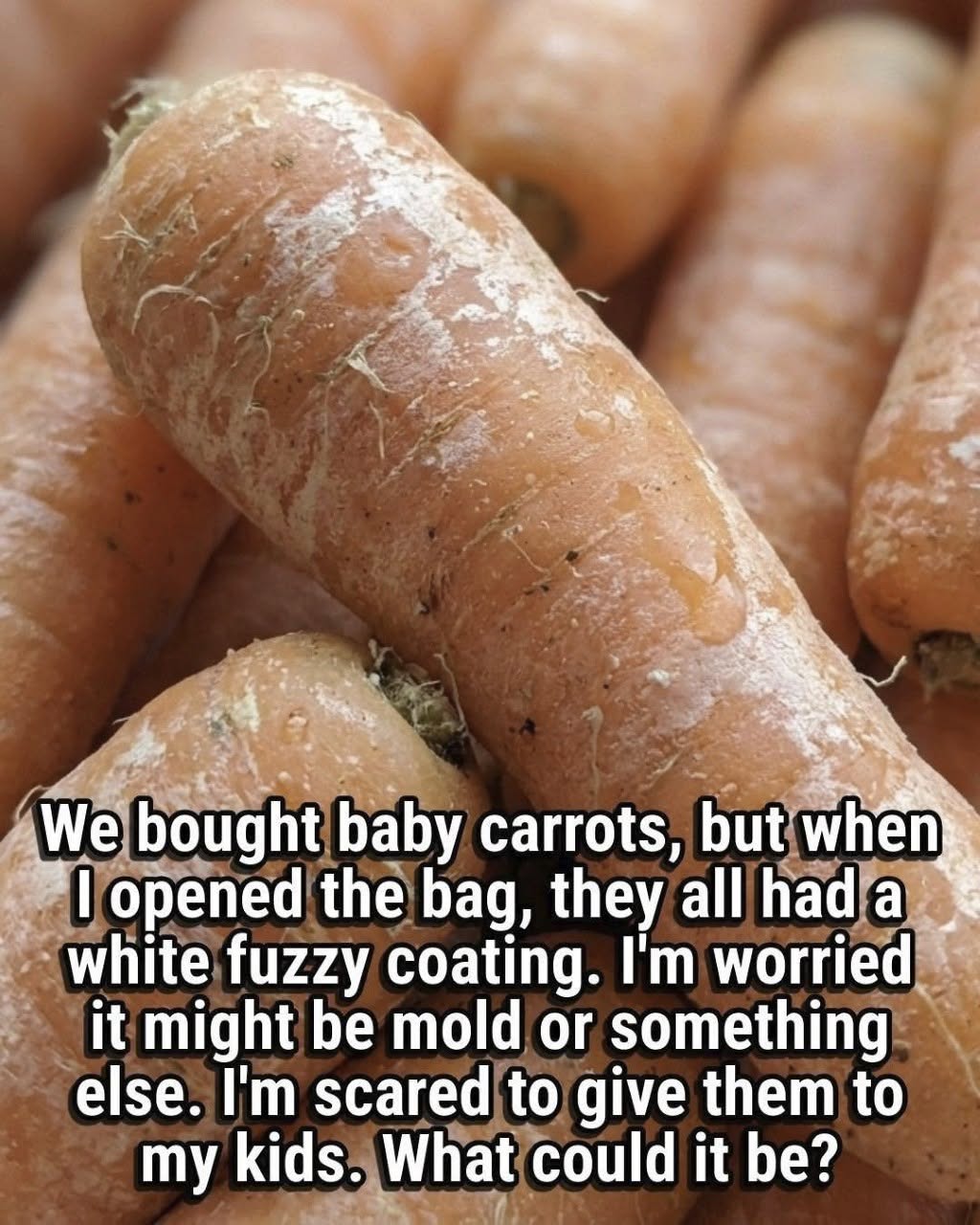
Baby carrots are peeled. Unlike full-sized carrots, baby carrots have had their outer skin (the protective layer) removed. This exposes the inner, water-rich tissue to air.
When the surface dries out: Water evaporates from the surface of the carrot. The dried tissue becomes opaque and white. This is the same process that makes your lips white when they’re chapped.
Why it looks fuzzy or powdery: The dehydrated surface cells can flake off, creating a powdery or slightly fuzzy appearance that resembles mold.
How to Tell the Difference (Carrot Blush vs. Mold)
Let me give you a clear comparison.
Feature Carrot Blush (Safe) Mold (Unsafe)
Color White or pale gray Green, black, blue, dark gray
Texture Powdery, dry Fuzzy, slimy, or sticky
Smell No smell or normal carrot smell Musty, sour, or “off”
Can it be rinsed off? Yes, easily washes away No, may leave stains or residue
Does it spread? No, it’s on the surface only Yes, it spreads to other carrots
Is the carrot slimy? No Yes (often)
The bottom line: If the white coating rinses off easily and the carrot underneath is firm and bright orange, it’s carrot blush. Eat it.
If the coating is green, black, blue, or fuzzy, and the carrot feels slimy or smells bad—toss it.
How to Prevent Carrot Blush (Storage Tips)
Let me give you practical ways to keep your baby carrots fresher longer.
1. Keep Them Moist (But Not Wet)