

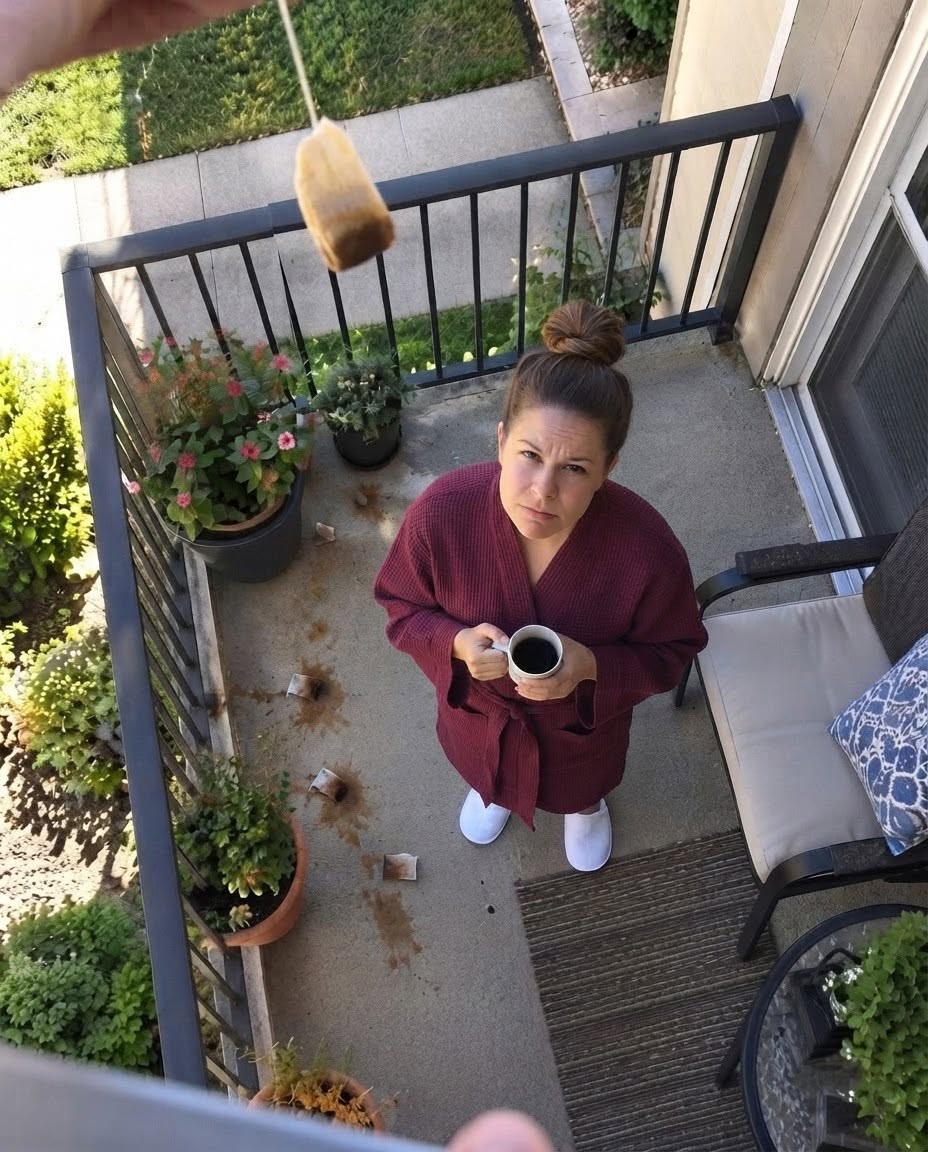
“My mother had gotten worse that week.”
He sighed.
“I shouldn’t have written the note.”
We stood there awkwardly.
Then I said,
“I have some packages downstairs for you.”
He looked surprised.
“I can bring them up later, if that helps.”
“Why would you do that?”
“Because the complaint was about tea bags.”
I paused.
“This is about being neighbors.”
He stared at me for a second.
Then something softened in his expression.
“I’d appreciate that.”
Before I left, he called after me.
“Mrs. Collier.”
I turned.
“I’m sorry about the towel.”
“And the cushion.”
“Yes.”
“You should have replaced them.”
“I know.”
He asked how much they cost.
Then he disappeared into his apartment and returned with cash.
The exact amount.
“I looked it up after the management letter,” he admitted.
I took it.
“You should have done that earlier.”
“Yes.”
“But doing it now still matters.”
That afternoon, I carried his packages upstairs.
His apartment looked unfinished.
Pictures still leaning against walls.
Books still boxed.
A home waiting to begin.
“You haven’t settled in,” I said.
“I kept thinking I’d wait until things got better.”
“Until your mother improved.”
He nodded.
I looked at the boxes.
“Put up the pictures.”
He frowned.
“Why?”
“Because waiting for the right moment to start living can become the most expensive waiting of all.”
He didn’t answer.
But I noticed later that the pictures went up.
Spring arrived.
No more tea bags.
Daniel began saying hello in the lift.
Then small conversations followed.
He started helping Mrs. Okafor with her groceries regularly.
In April, I found a package outside my door.
Inside was a new cushion cover.
Grey-blue.
Not an exact match for my chair.
But close.
There was a note.
I still owe you a towel.
I’m working on it.
D.
I smiled.
Then I put the cushion cover on the chair.
Daniel’s mother died in June.
The next morning, he knocked on my door.
Continue reading on the next page →