

1. Straightening the affected leg.
2. Pulling your toes gently toward your shin.
3. Holding the stretch without bouncing.
4. Walking slowly once the muscle begins to relax.
Gentle massage may also help.
Leg cramp remedies
Some people find warmth soothing after a cramp, such as a warm shower or heating pad.
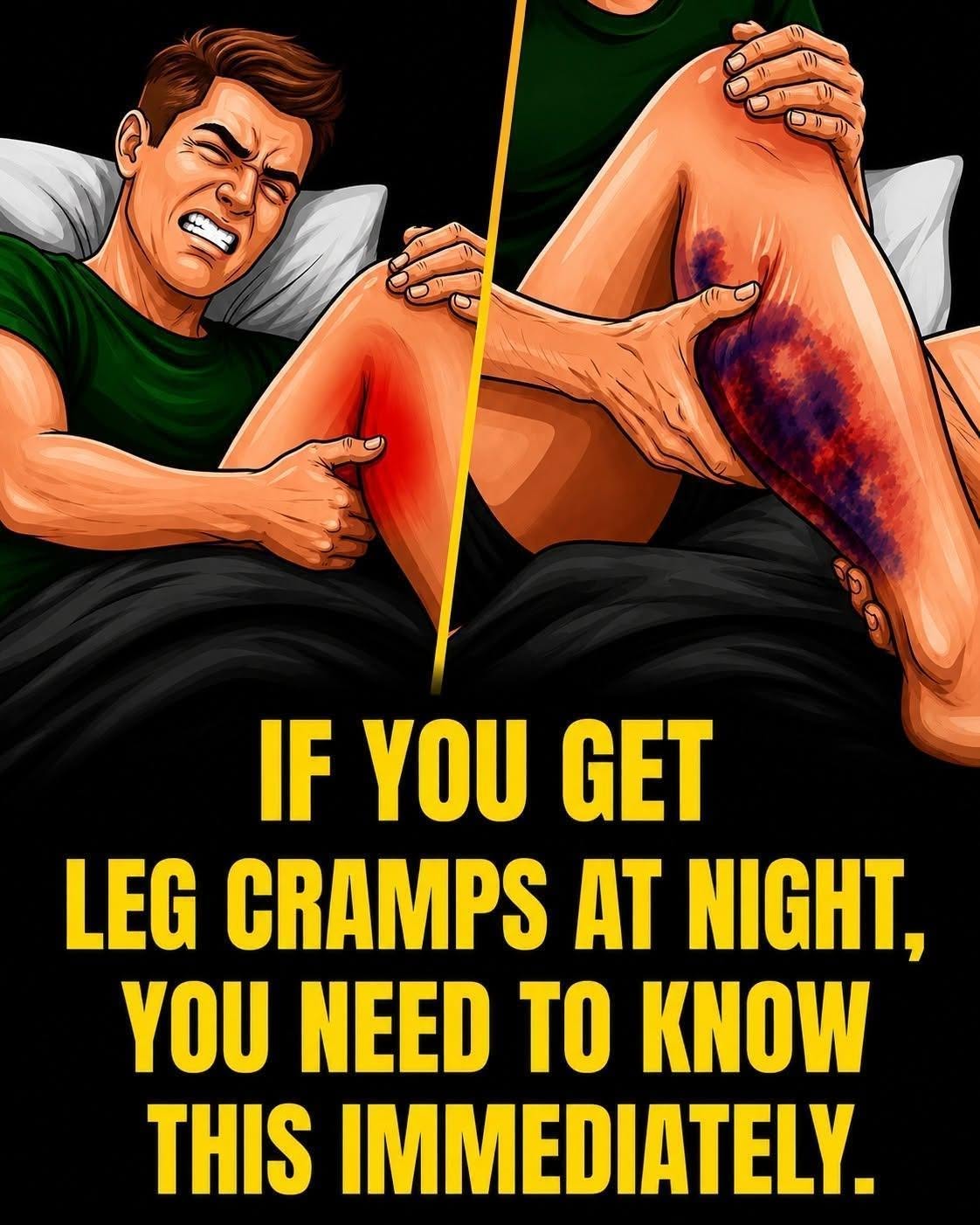
Avoid aggressive stretching or forceful massage if the leg is swollen, red, unusually warm, or extremely painful.
## Can Stretching Before Bed Help?
It may.
Gentle calf and hamstring stretching before bedtime is a low-risk strategy commonly recommended for people with recurring nighttime cramps. The source article also identifies regular stretching as one of the practical approaches that may help reduce episodes.
A simple calf stretch can be done by standing facing a wall, placing one foot behind you, keeping the heel on the floor, and leaning forward gently.
Hold for about 20–30 seconds and repeat on the other side.
## Should You Take Magnesium?
Fitness
Magnesium is frequently promoted online as an instant cure for nighttime leg cramps, but the evidence does not support treating every case this way.
Some people can genuinely have low magnesium levels because of medical conditions, medications, digestive disorders, or inadequate intake. But ordinary nighttime cramps do not
prove magnesium deficiency.
Taking magnesium unnecessarily can cause diarrhea and may be inappropriate for some people, particularly those with impaired kidney function.
Health Conditions
If deficiency is suspected, it is better to discuss testing and supplementation with a healthcare professional.
## What About Potassium?
Potassium is another nutrient commonly blamed whenever muscles cramp.
Severely abnormal potassium levels can affect muscles and the heart, but most people with ordinary nighttime cramps do not need potassium supplements.
Potassium supplements can actually be dangerous when taken unnecessarily, especially for people with kidney disease or those taking certain medications.
A balanced diet is a safer way for most people to obtain potassium.
Foods naturally containing potassium include:
* Potatoes
* Beans and lentils
* Bananas
* Avocado
* Leafy vegetables
* Yogurt
* Fish
Vitamins & Suppl
flexibility.
### Move During the Day
Health Conditions
If you sit for long periods, stand up and walk periodically.
Likewise, people who stand all day may benefit from rest and gentle stretching.
### Eat a Balanced Diet
A varied diet generally provides the minerals muscles need without automatically requiring supplements.
emergency medical help.
## Do Night Cramps Mean You Have Poor Circulation?
Health Conditions
Not necessarily.
Muscle cramps are sometimes associated with circulation problems, but frequent nighttime cramps alone are not enough to diagnose poor circulation.
Circulatory problems are more concerning when symptoms also include:
* Happen very frequently
* Regularly interrupt your sleep
* Are becoming increasingly severe
* Last unusually long
* Begin after starting a new medication
* Occur with muscle weakness
* Occur with persistent numbness
* Do not improve despite simple measures
The original source also recommends evaluation when cramps are frequent or accompanied by significant swelling, redness, weakness, numbness, or severe pain.
Anatomy
## A Swollen, Red, Painful Leg Is Different
A simple muscle cramp usually improves when the muscle relaxes.
A leg that remains **swollen, warm, red, or painful**, particularly when only one leg is affected, should not automatically be dismissed as a cramp.
These symptoms can have several causes and sometimes require urgent evaluation.
If leg swelling or pain occurs together with **sudden shortness of breath, chest pain, coughing up blood, fainting, or severe breathing difficulty**, seek emergency medical help.
## Do Night Cramps Mean You Have Poor Circulation?
Not necessarily.
Muscle cramps are sometimes associated with circulation problems, but frequent nighttime cramps alone are not
enough to diagnose poor circulation.
Circulatory problems are more concerning when symptoms also include:
* Leg pain triggered by walking that improves with rest
* A persistently cold foot
* Changes in skin color
* Wounds that heal poorly
* Weak pulses in the feet
Those symptoms deserve medical evaluation.
## Why You Shouldn’t Ignore Persistent Cramps
The occasional nighttime calf cramp is usually more painful than dangerous.
But recurring episodes are worth paying attention to because they can interfere with sleep and, in some cases, may be related to medication, nerve problems, circulation issues, or another health condition.
The goal is not to panic every time a muscle tightens. It is to recognize when the pattern has changed.
The Bottom Line
Nighttime leg cramps are sudden muscle contractions that commonly affect the calves, feet, and thighs. Muscle fatigue, prolonged positioning, age, some medications, and certain medical conditions can all contribute.
When a cramp happens, gentle stretching, walking, massage, and warmth may provide relief. Regular stretching, sensible hydration, gradual exercise, and a balanced diet may help reduce future episodes.
But do not assume every cramp means you need magnesium, potassium, or another supplement.
If cramps become frequent, unusually painful, or are accompanied by persistent swelling,
redness, numbness, or weakness, get medical advice. Sometimes a nighttime cramp is simply a cramp—but knowing when it is **not** is the important part.