

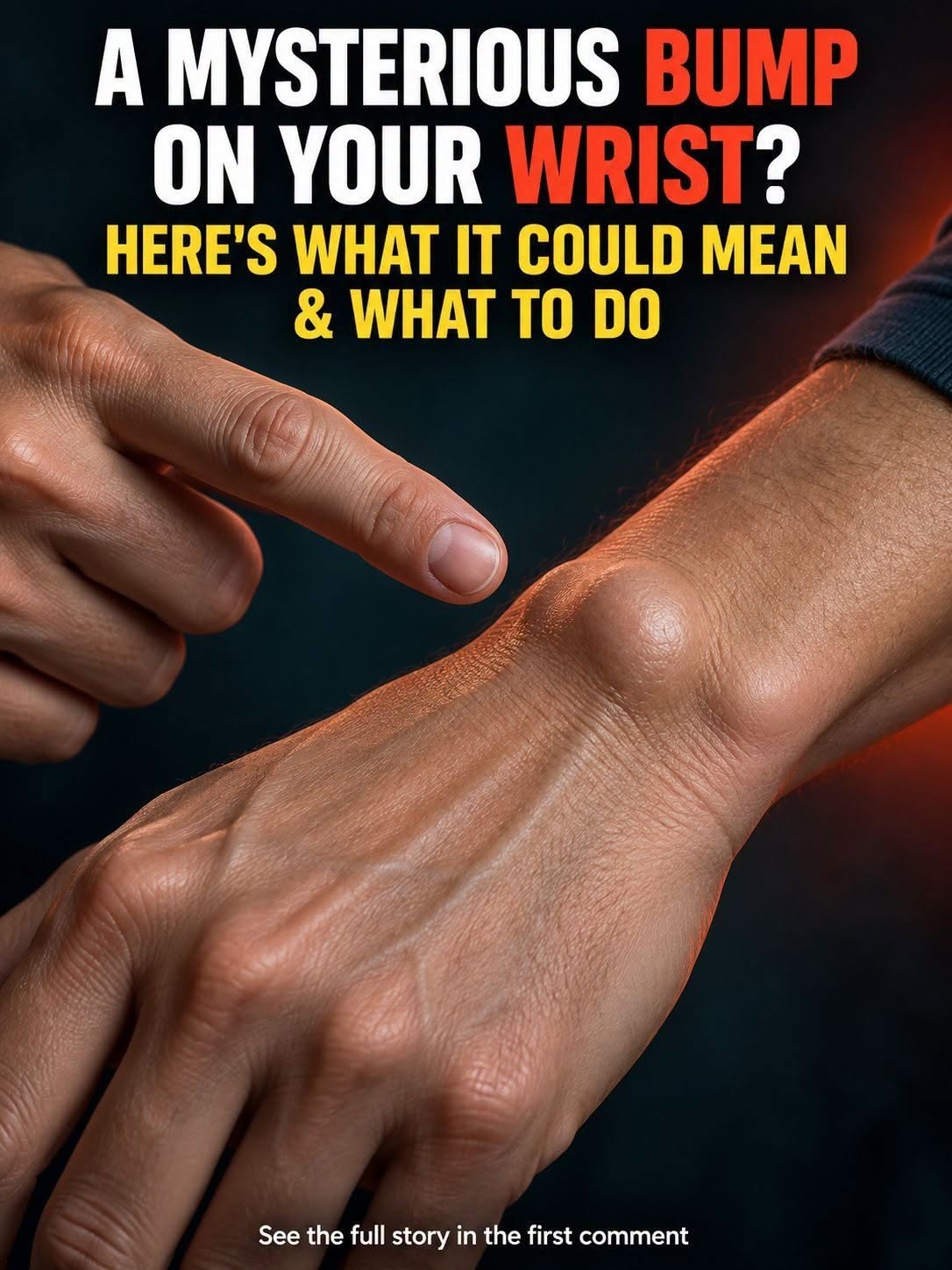
However, NHS guidance recommends getting a lump assessed if you’re worried about it, if it is getting larger, or if it is hard and doesn’t move. A lump that becomes very painful, hot or red deserves more urgent medical attention.
You should also seek medical advice if you experience persistent numbness, tingling, weakness or difficulty moving the wrist or hand.
Don’t Try to Pop a Wrist Lump at Home
You may have heard of the old practice of hitting a ganglion cyst with a heavy object to make it disappear.
Don’t do it.
Mayo Clinic specifically advises against hitting a ganglion cyst or attempting to puncture it yourself. Hitting it can damage the hand, while puncturing it can cause an infection.
A medical professional can determine whether drainage or another treatment is actually appropriate.
The Bottom Line
Finding
a bump on your wrist doesn’t automatically mean something serious.
Ganglion cysts are common, noncancerous and often don’t require treatment. Other possibilities include epidermoid cysts, a carpal boss, giant cell tumors of the tendon sheath and rheumatoid nodules.
But because different conditions can look similar, avoid diagnosing a new lump yourself.
If it is growing, hard, unusually painful, red or hot, or causing numbness, weakness or problems moving your hand, getting it professionally evaluated is the safest approach.
Medical disclaimer: This article is for general educational purposes only and is not intended to diagnose or treat any medical condition.