

5. Set up the soak the right way
Plug the sink and add the filter first, then carefully fill with very hot water until the filter is covered as much as possible. I aim for water that is hot from the tap, not boiling. Then I add 1/2 cup baking soda and 1 to 2 tablespoons dish soap. Swish the water gently with a spoon or gloved hand to dissolve the baking soda.
If the filter won’t lie flat, that’s okay. Let one side soak 15 to 20 minutes, then flip it and soak the other side another 15 to 20 minutes. When the grease is heavy, you’ll often see the water turn yellowish or brownish, and that’s a good sign the film is lifting off the mesh.
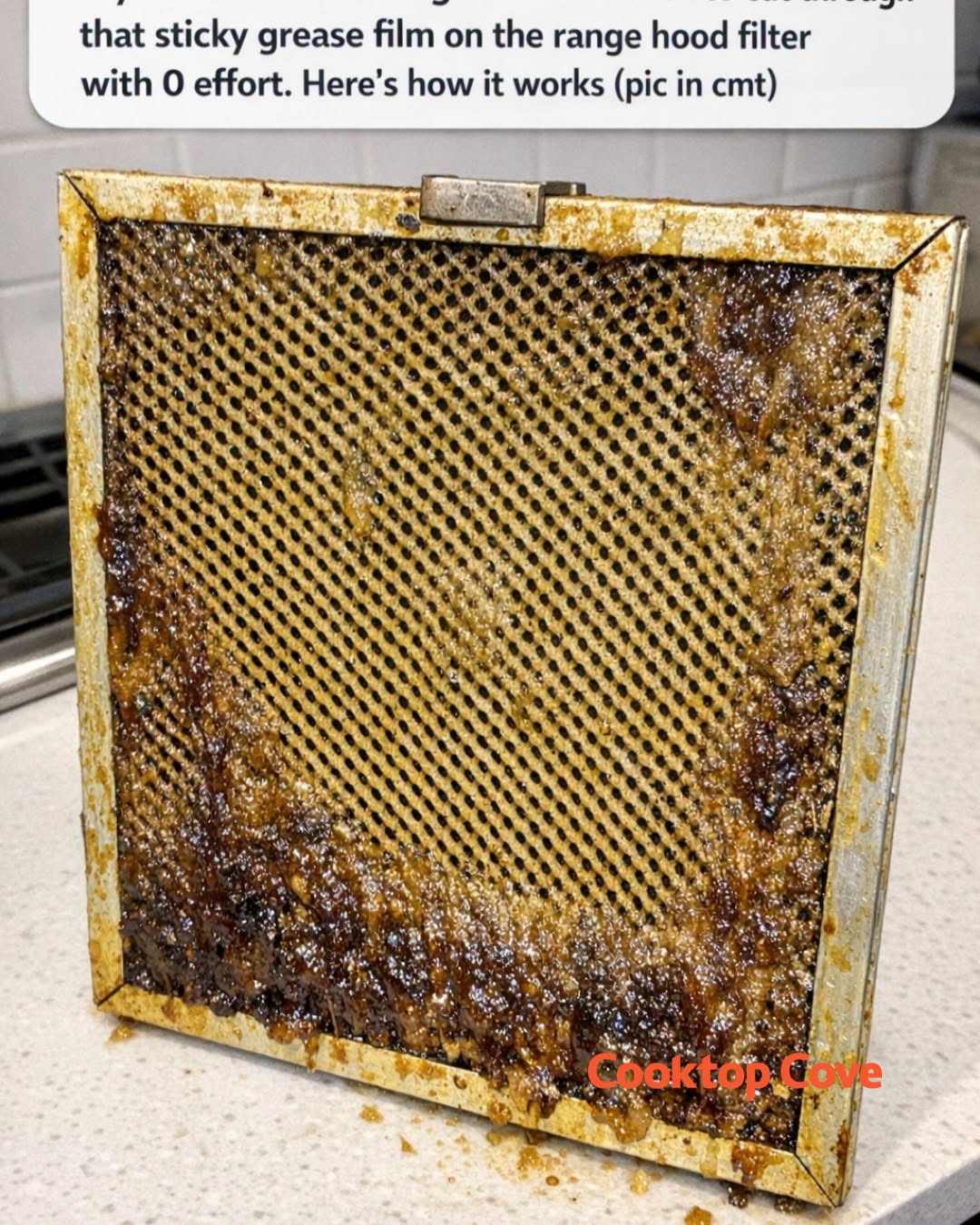
6. Why this works so well on sticky grease film
Cooking grease hardens into a clingy layer, especially when it mixes with dust and kitchen steam. Hot water softens that layer. Dish soap is made to break up oils. Baking soda helps by loosening residue and gently cutting through buildup without being harsh like some abrasive cleaners.
That’s why this trick works better than a quick rinse under warm water. A rinse barely touches that stubborn film. A soak gives the cleaner time to reach into all the tiny layers of metal mesh. In my experience, that time is what turns this from a dreaded job into a simple one.
7. What to do after soaking
Once the filter has soaked, lift it out and let the excess water drip back into the sink for a few seconds. Then rinse it under warm running water. Many times, a surprising amount of grease slides right off at this stage. If there are still a few patches left, use a soft brush and very light pressure.
Usually, the dirtiest areas are around the edges and corners. An old toothbrush works nicely there. I do not scrub hard, because aluminum mesh can bend. The goal is just to nudge off whatever the soak loosened. On a regularly maintained filter, this touch-up step takes me less than 2 minutes.
8. Dry it completely before putting it back
This is one step I never skip. After rinsing, I shake off excess water and set the filter upright on a dish towel or drying rack. If I’m in a hurry, I blot it gently with a clean towel and then let it air-dry another 30 to 60 minutes.
Putting a damp filter back into the hood can trap moisture where you don’t want it. I want that mesh fully dry before it goes back over the fan area. It’s a small thing, but it helps keep everything fresher and prevents drips later when the hood warms up during cooking.
9. If the grease is extra stubborn, repeat instead of scrubbing harder
When a filter has gone 6 months or longer without a proper cleaning, one soak may not get every bit of buildup. In that case, I simply drain the dirty water and repeat the soak with fresh hot water, another 1/4 to 1/2 cup baking soda, and a little more dish soap.
I’d much rather soak twice for 20 minutes each than attack the filter with a harsh pad. Scrubbing too aggressively can fray or flatten the mesh, and then you’re dealing with damage on top of grease. Repeating the soak is gentler and usually more effective anyway.
10. A few things I do not recommend
I avoid bleach, oven cleaner, and very abrasive scouring powders for this job unless the manufacturer specifically says they’re safe. Strong chemicals can discolor aluminum, leave residue, or damage finishes. I also stay away from steel wool, which can scratch the metal and leave little fragments behind.
Some people like to run filters through the dishwasher, and some manufacturers allow it, but I’m cautious with aluminum mesh. Dishwashers can sometimes darken aluminum or bake on residue if the filter is extremely greasy. A controlled sink soak gives me better results and less guesswork.
11. Don’t forget the hood area around the filter
Once the filter is out, I take 2 extra minutes to wipe the underside of the hood. That area often has a thin greasy film too. I use a soft cloth dipped in warm, soapy water, wring it out well, and wipe around the opening, fan cover area, and any exposed metal surface I can reach safely.
If there’s a sticky band near the front edge, I lay the warm cloth over it for 30 seconds before wiping. That little pause softens the grease so it lifts more easily. It makes a big difference in how clean the whole kitchen feels, not just the filter.
12. How often I clean mine to keep it easy
For an average family kitchen, every 4 to 6 weeks is a good rhythm if you cook most days. If you fry foods often, cook bacon every weekend, or have a lot of high-heat stovetop meals, every 3 to 4 weeks may be better. If you hardly ever use the hood, every 2 to 3 months may be enough.
In my home, I try to tie it to another routine chore so I remember. Sometimes I do it the same day I wipe cabinet fronts or clean the microwave. When I stay on top of it, the whole process takes maybe 20 minutes total, and most of that is soaking time while I do something else.
13. My favorite trick for picky-eater households that cook often
This may sound funny, but families with picky eaters sometimes make more stovetop “backup meals” than they realize. In my house, that can mean one pan for fajita filling, another for plain chicken, and maybe grilled cheese for someone who suddenly changed their mind. All that extra cooking adds up to more grease in the air.
Because of that, I’ve found it helps to run the hood fan every single time I cook, even for something simple like browning 1 pound of ground beef or sautéing onions for 8 minutes. Then I leave the fan on for another 5 minutes after the burners go off. It catches more grease before it settles.
14. Signs it’s time to clean the filter sooner
If the hood smells a little stale when the fan runs, if the mesh looks yellow or dull, if the filter feels sticky to the touch, or if you notice a greasy dust collecting on nearby cabinets, don’t wait. Those are all signs the filter is loaded up and not catching grease as well as it should.
Another clue is weaker airflow. If steam from a pot of soup or pasta water isn’t being pulled up the way it used to, the filter may be clogged. It’s a simple maintenance task, but it really does help the hood do its job better.
15. The reason I keep coming back to this method
I’ve tried shortcuts over the years, and this is the one I actually stick with because it feels manageable. There’s no marathon scrubbing session, no expensive cleaner, and no complicated steps to remember. It’s just hot water, baking soda, dish soap, and a little patience.
What I appreciate most is that it turns one of those grimy kitchen chores into something gentle and doable. I can start the soak, help with homework, pack lunches, or tidy the counters, and then come back to a filter that’s mostly cleaned itself. Around here, that absolutely counts as a win.