

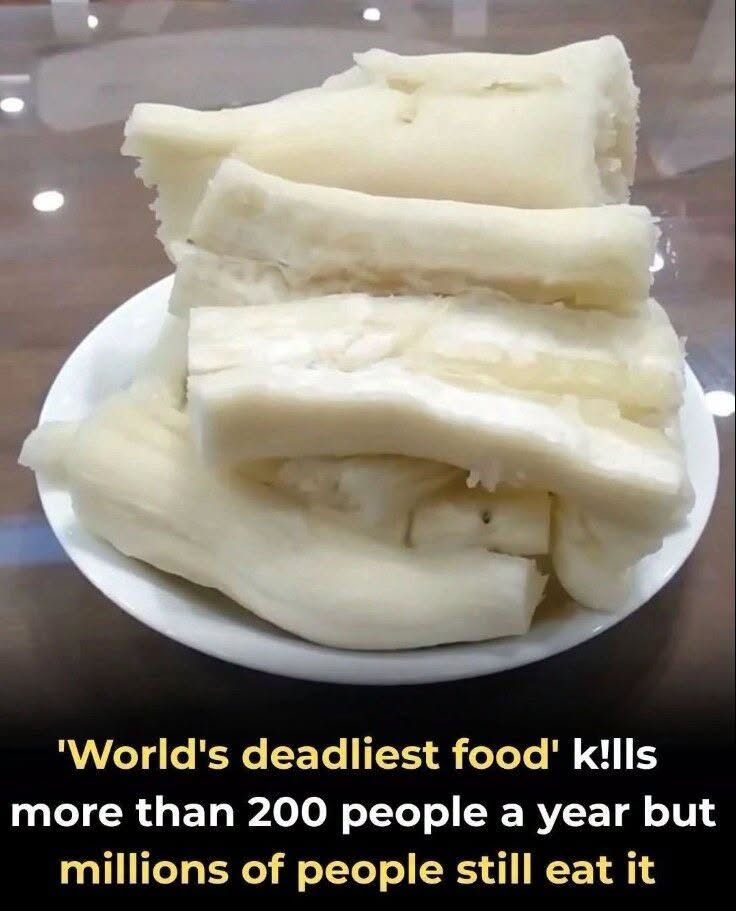
Over 200 People Are Killed By The “World’s Deadliest Food” Every Year, But Almost 500 Million People Still Eat It
Over 200 People Are Killed By The “World’s Deadliest Food” Every Year, But Almost 500 Million People Still Eat It
Around the world, countless traditional foods are celebrated for their unique flavors, rich history, and cultural significance. While most are perfectly safe when prepared correctly, a handful require extraordinary care before they can be eaten. One of the most famous examples is cassava, a starchy root vegetable that serves as a dietary staple for nearly 500 million people worldwide. Despite its importance as a reliable source of carbohydrates, cassava has also earned a reputation as one of the world’s most dangerous foods when it is not processed properly.
Every year, hundreds of people suffer severe poisoning after eating improperly prepared cassava. The plant naturally contains compounds that can release cyanide, making careful preparation essential before consumption. Fortunately, communities that have relied on cassava for generations have developed safe techniques to remove these harmful substances, allowing millions to enjoy it every day without issue.
So why is such a potentially dangerous food still so popular? The answer lies in its affordability, resilience, nutritional value, and deep cultural roots. Understanding both the benefits and the risks of cassava helps explain why this remarkable crop continues to feed millions across Africa, Asia, South America, and beyond.
What Is Cassava?
Cassava (also called yuca or manioc) is a tropical root vegetable native to South America but now cultivated throughout many warm regions of the world. It grows well even in poor soils and can survive drought conditions that would devastate many other crops.
Because of its resilience, cassava has become one of the world’s most dependable food sources, especially in developing countries where food security is a major concern.
The root is rich in carbohydrates and provides a valuable source of calories. It can be boiled, baked, fried, mashed, or ground into flour for breads, pastries, noodles, and many traditional dishes.
Why Is Cassava Considered Dangerous?
The danger comes from naturally occurring chemicals called cyanogenic glycosides. When the cassava root is damaged, peeled, grated, or chewed, these compounds can release hydrogen cyanide.
If consumed in large enough quantities without proper preparation, cyanide poisoning may occur.
Symptoms can include:
Nausea
Vomiting
Stomach pain
Dizziness
Weakness
Difficulty breathing
Confusion
Rapid heart rate
In severe cases, cyanide poisoning can become life-threatening if medical treatment is not received quickly.
Not All Cassava Is Equally Toxic
There are two primary types of cassava:
Sweet Cassava
Sweet cassava contains relatively low levels of cyanogenic compounds. It still requires cooking before eating, but the preparation process is generally simpler and safer.
Bitter Cassava
Bitter cassava contains much higher concentrations of cyanide-producing compounds. It requires extensive processing before it becomes safe for consumption.
Traditional preparation often includes:
Peeling
Grating
Soaking
Fermenting
Pressing
Drying
Thorough cooking
These steps dramatically reduce cyanide levels and make the food safe.
Why Do So Many People Continue Eating It?
Despite its reputation, cassava remains one of the world’s most important food crops for several reasons.
1. Exceptional Food Security
Cassava survives droughts, poor soil, high temperatures, and unpredictable weather. In many rural communities, it serves as a dependable backup crop when other harvests fail.
2. Affordable Nutrition
Cassava provides inexpensive calories for families who may have limited access to other staple foods.
3. Long Shelf Life in the Ground
Unlike many crops that must be harvested immediately, cassava roots can often remain underground for months until needed.
4. Incredible Versatility
Cassava is transformed into dozens of foods, including:
Flour
Tapioca
Chips
Bread
Cakes
Dumplings
Porridge
Snacks
Traditional Knowledge Saves Lives
Communities that have prepared cassava for generations understand exactly how to remove its toxins.
These traditional methods have been passed down through families for centuries and remain remarkably effective.
Next Page…