
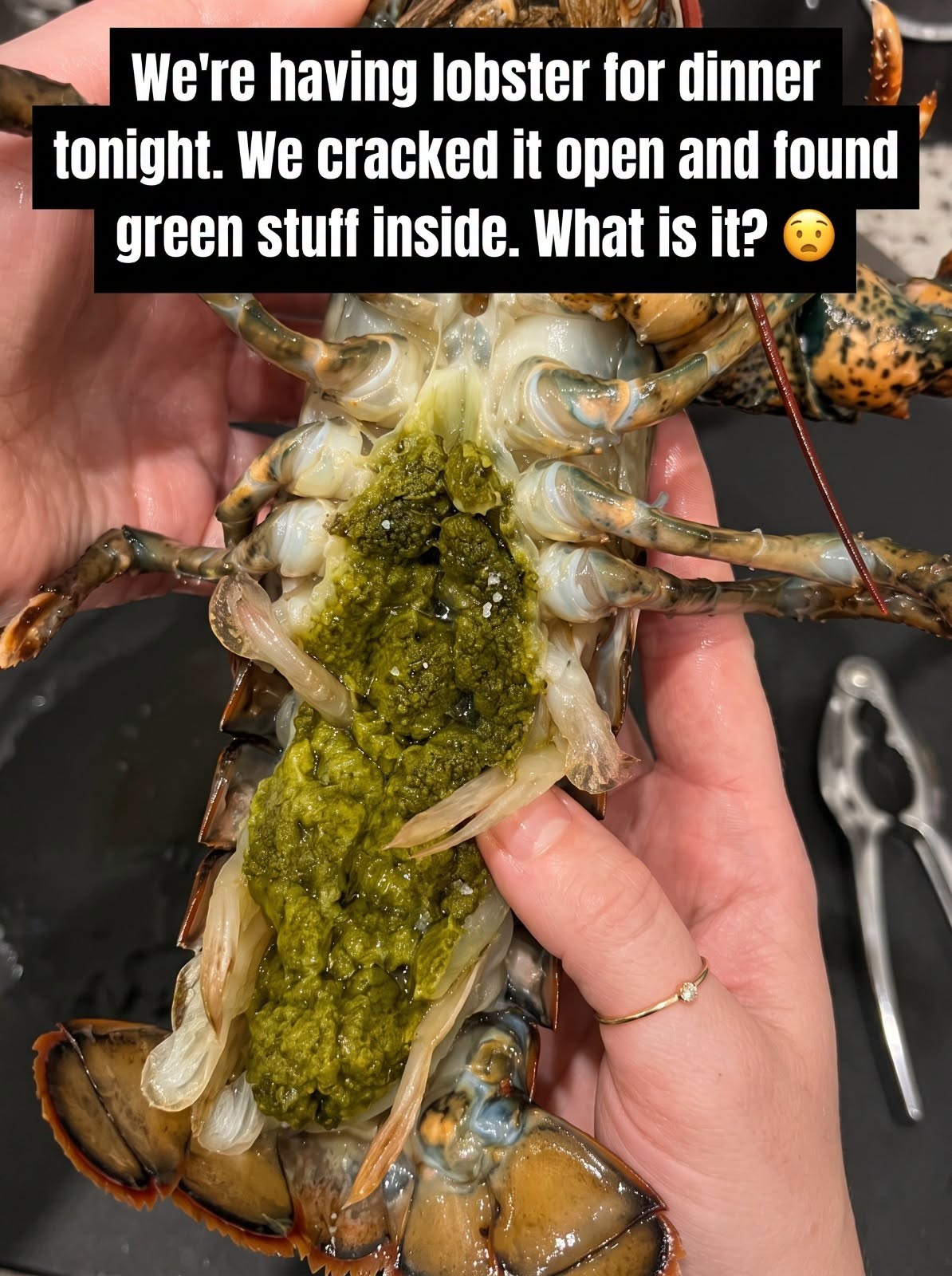
So the next time you crack open a lobster and discover a little pool of green inside, you don’t have to wonder whether you’ve found some strange hidden ingredient.
You’ve found tomalley—the lobster’s hepatopancreas.
It’s one of those fascinating examples of how food can teach us a little biology while we’re enjoying dinner. The color may be surprising, the texture may be unusual, and opinions about eating it may vary wildly.
Personally, I think that’s part of the fun of eating whole seafood. You never quite know what you’ll discover!
And remember: while tomalley has a long culinary history, current seafood-safety advisories should guide whether you consume it, especially because this organ can accumulate environmental contaminants.
Have you ever opened a lobster and wondered about the green stuff inside? Leave a comment and tell me what you thought it was the first time you saw it! And if you learned something new, share this article on Pinterest so another curious seafood lover can solve the lobster mystery, too.
More Seafood Mysteries to Explore
If you’re fascinated by the unusual things we discover in seafood, you might also enjoy learning about:
- Why shrimp sometimes have a dark line along their backs
- What the orange material inside a crab means
- Why oysters can taste different throughout the year
- The difference between lobster, crayfish, and langoustine
- Why some seafood tastes sweeter than others
- How shellfish get their distinctive flavors
Because honestly, the ocean is full of culinary mysteries—and I have a feeling this won’t be the last one we crack open!