
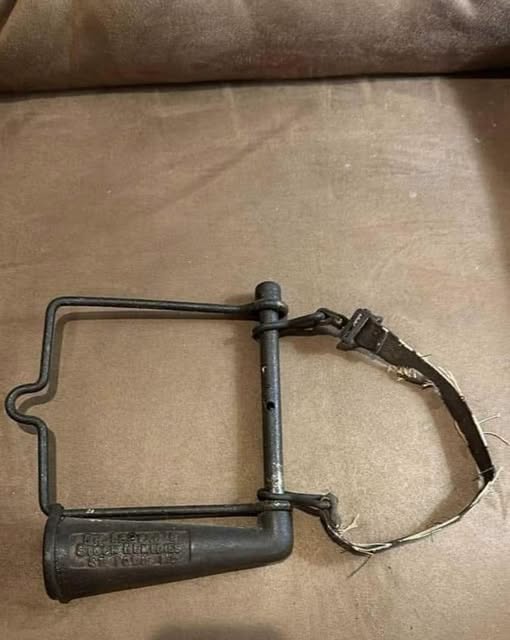
The fascinating thing about an antique horse drencher is that its shape wasn’t arbitrary.
Its various components were designed around the physical challenges of treating a large animal.
Depending on the model, a drencher might feature:
- A metal reservoir for holding a treatment
- A long or curved delivery tube
- A plunger or pumping mechanism
- A bit or mouthpiece
- A handle, ring, or hook
- Straps or other fittings
The purpose was to allow the operator to deliver a substance into the horse’s mouth in a controlled manner.
Historical veterinary instruments demonstrate just how much ingenuity went into solving these problems before modern equipment became available. The Science Museum Group, for example, has a later horse drencher from Australia specifically catalogued for administering powdered substances.
Brass Was a Practical Material
The warm golden appearance is one of the things that makes these old veterinary instruments so attractive to collectors.
Brass was widely used for many historical instruments because it was durable, workable, and could be manufactured into detailed shapes.
It’s also worth remembering that not every antique horse drencher is brass. Historical examples were made from different materials, and museum collections contain horse-drenching tools made from pewter and other metals.
That means the material alone isn’t enough to identify an object.
Its shape, fittings, markings, construction, and historical context are all useful clues.
How Horse Drenchers Changed Over Time
Continue reading on the next page →