

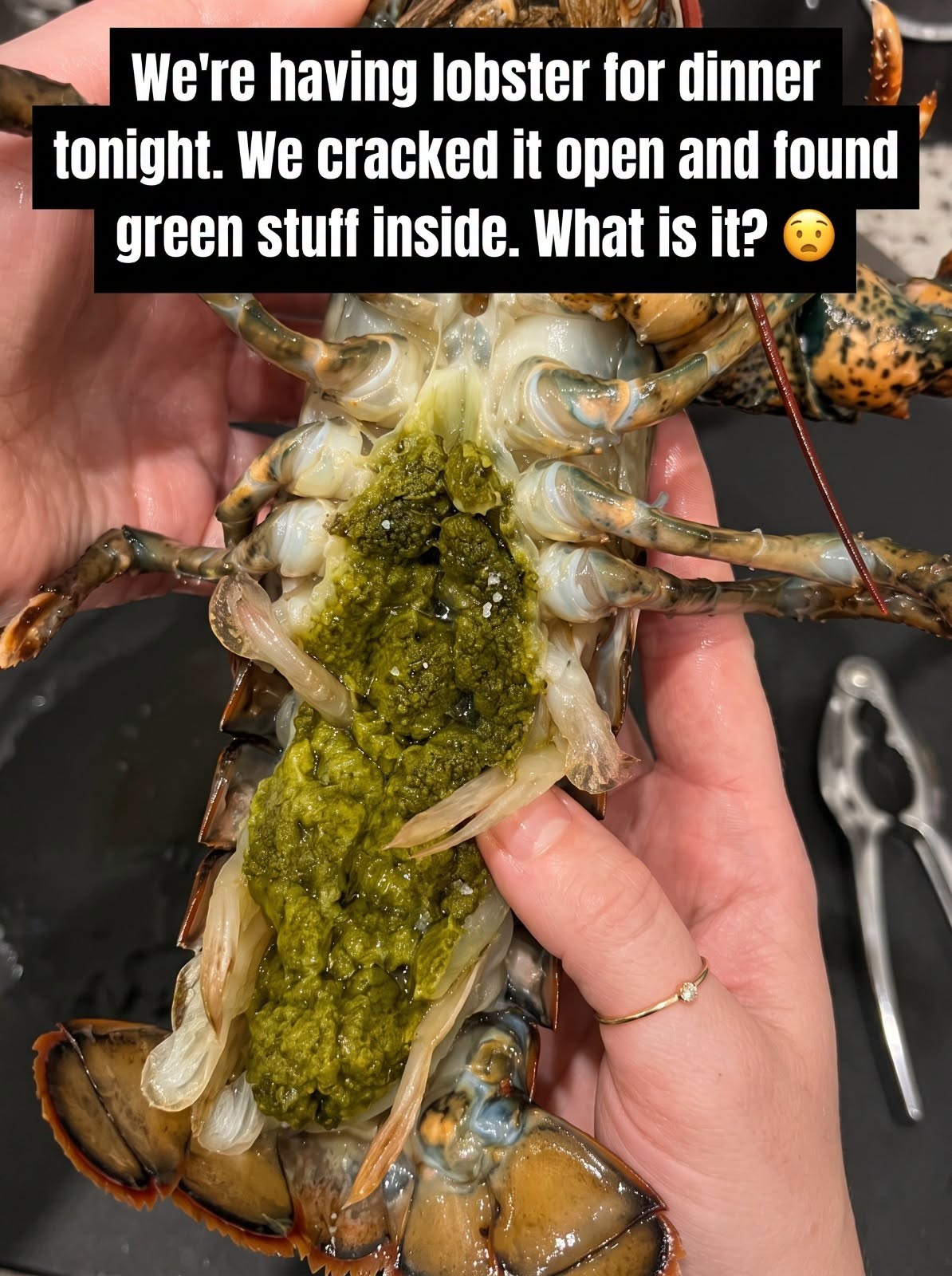
Historically, many seafood traditions have valued parts of animals that might be discarded elsewhere.
Tomalley has been appreciated by some lobster lovers because of its rich flavor and creamy texture.
It’s particularly appealing to people who enjoy getting the most out of a whole lobster rather than eating only the obvious meat.
There’s also something wonderfully old-fashioned about sitting around a table with a whole lobster, cracking the shell, and discovering all those little edible treasures inside.
Nothing wasted. Everything appreciated.
Is Lobster Tomalley Safe to Eat?
This is the important part.
Although tomalley has traditionally been eaten, there are safety concerns that make it different from ordinary lobster meat.
The lobster’s hepatopancreas can accumulate environmental contaminants, including certain marine biotoxins and pollutants. Because of this, public-health authorities have sometimes advised people to avoid eating tomalley, particularly when harmful algal blooms or other contamination events affect lobster-growing or harvesting areas.
The concern isn’t that green tomalley is inherently poisonous. Rather, the organ can concentrate contaminants that may be present in the marine environment.
For that reason, it’s wise to check local seafood advisories and follow current guidance for the specific area where the lobster was harvested.
What About Lobster Meat?
Lobster meat is generally the part people commonly eat and is subject to seafood safety regulations and handling recommendations.
Still, proper cooking and refrigeration matter enormously.
Fresh lobster should be kept cold, handled hygienically, and cooked thoroughly.
When in doubt about a lobster from an unfamiliar source, the safest choice is to follow the advice of the relevant local health or fisheries authority.
Why Do Lobsters Have Tomalley in the First Place?
Continue reading on the next page →