

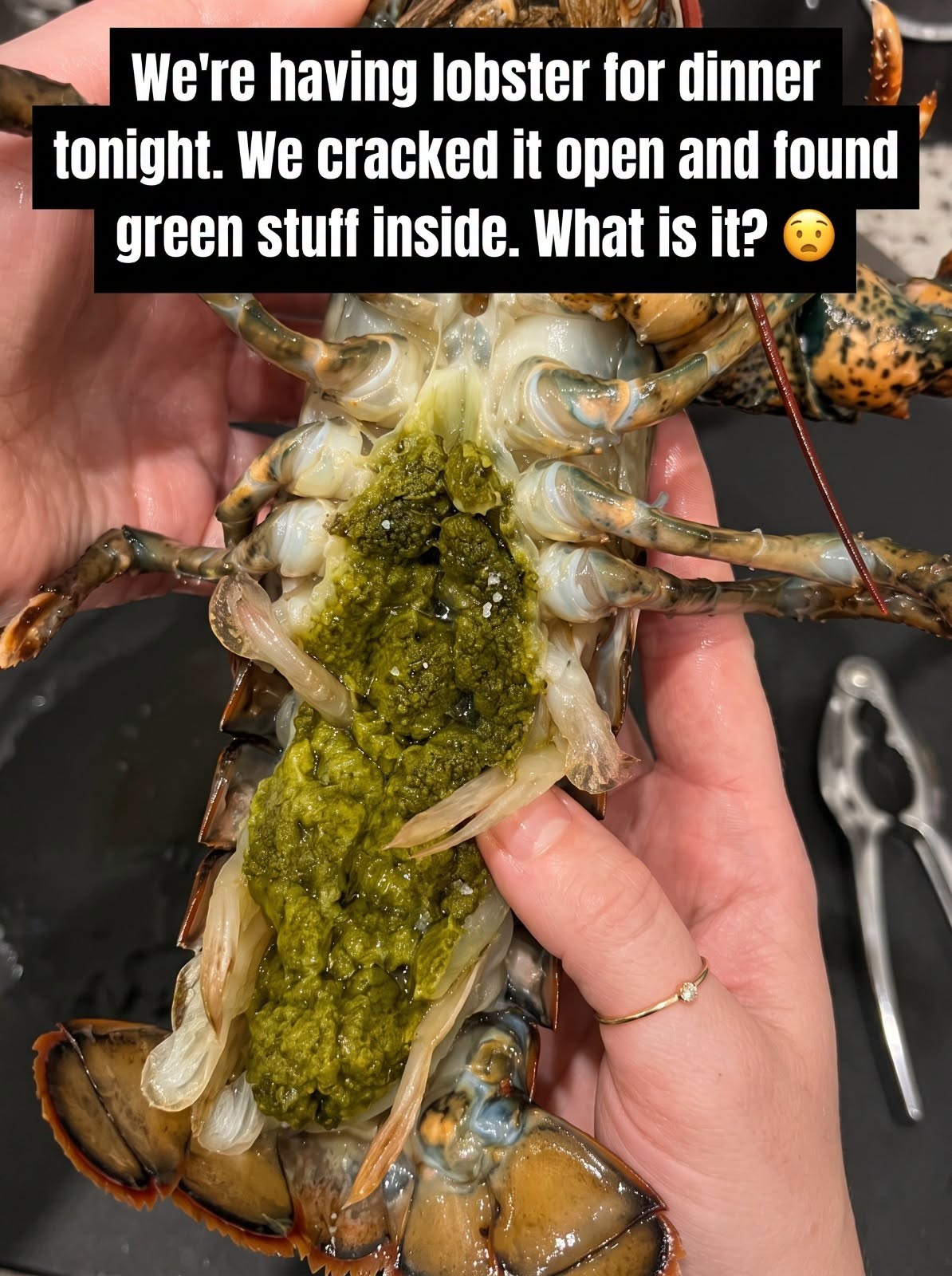
No—and this is another common source of confusion.
Tomalley and lobster roe are different things.
Tomalley is associated with the lobster’s digestive system, while roe refers to eggs.
Female lobsters carrying eggs may have orange or reddish roe, sometimes called coral because of its vivid color.
A Quick Lobster Anatomy Lesson
When you’re eating a whole lobster, you may encounter several different parts:
- Claw and tail meat: The familiar white meat most people are after.
- Tomalley: The green digestive gland.
- Roe: Eggs found in mature female lobsters.
- Shell: The hard external covering that protects the lobster.
- Gills: Respiratory structures inside the body.
It’s basically a tiny marine biology lesson sitting right there on your dinner plate!
What Does Lobster Tomalley Taste Like?
Here’s where opinions can get wonderfully divided.
People who enjoy tomalley often describe it as rich, savory, briny, buttery, and intensely lobster-like.
Because it contains concentrated flavors from the lobster’s digestive system, its taste can be considerably stronger than the delicate meat in the claws or tail.
Some seafood lovers scoop it up immediately.
Others see that green color and say, Absolutely not!
And honestly, that’s okay. Seafood preferences are personal.
If you enjoy rich shellfish flavors, tomalley can add a luxurious depth to lobster dishes. It can be mixed into sauces, spread onto bread, stirred into butter, or simply tasted on its own.
Why Do Some People Consider Tomalley a Delicacy?
Continue reading on the next page →