
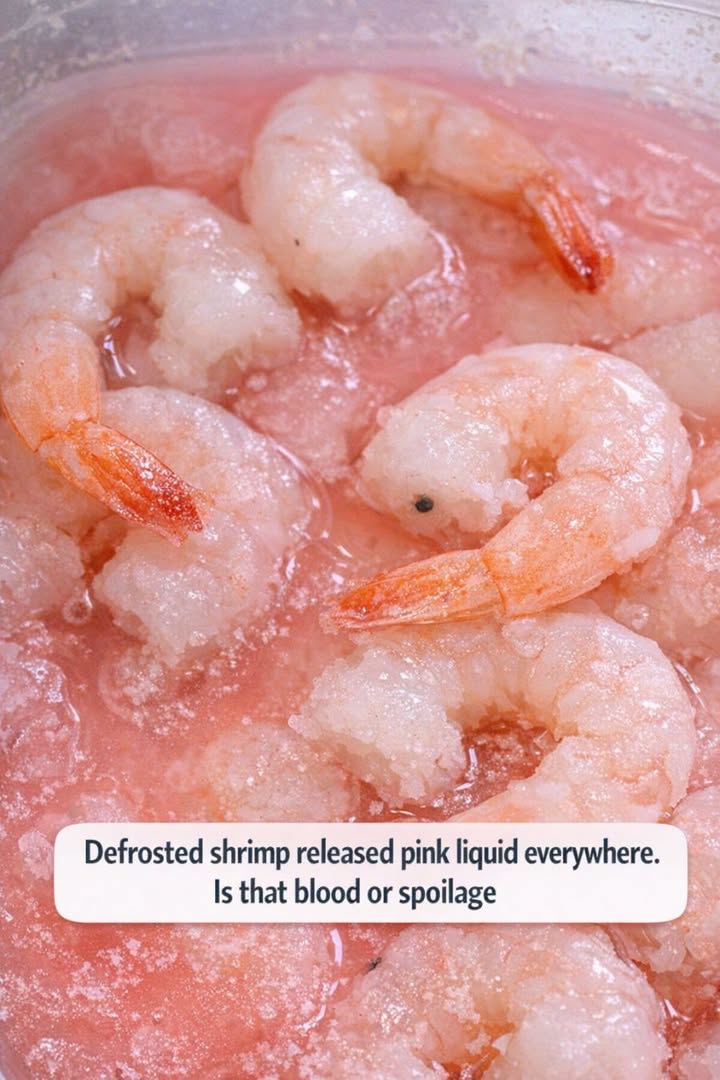
Defrosted shrimp released pink liquid everywhere. Is that blood or spoilage.
When defrosting shrimp, many people are surprised to see a pink liquid pooling around the seafood. This often leads to questions about whether the shrimp is safe to eat or if it’s showing signs of spoilage. Understanding what this pink liquid is and why it appears can help you make better decisions about your seafood.
Defrosting shrimp is a common practice in preparing meals, but the appearance of pink liquid can be alarming. This liquid, sometimes mistaken for blood, raises concerns about the freshness and quality of the shrimp. Knowing the difference between natural thawing processes and spoilage signs is crucial for both food safety and culinary success.
1. What Is The Pink Liquid You See When Shrimp Defrosts?
The pink liquid observed when shrimp defrosts is primarily composed of water and natural pigments. This liquid is often referred to as ‘thaw drip,’ which occurs as ice crystals formed during freezing melt. The pigments, such as astaxanthin, are naturally occurring in shrimp and contribute to their characteristic color.
Astaxanthin is a carotenoid pigment that gives shrimp their pinkish hue. When shrimp are frozen, the ice crystals can rupture cell walls, causing pigments and water to leak out during thawing. This is a normal process and doesn’t necessarily indicate spoilage.
2. Is That Pink Liquid Actually Blood?
Unlike mammals, shrimp do not have red blood cells or hemoglobin, meaning they don’t bleed red like humans do. Instead, shrimp have a clear or bluish fluid called hemolymph that circulates nutrients and waste. Therefore, the pink liquid seen during defrosting is not blood.
The pink coloration is due to the aforementioned pigments like astaxanthin, not blood. This distinction is important because it helps clarify that the presence of pink liquid is not inherently a sign of spoilage.
3. Understanding Natural Pigments And Thaw Drip In Shrimp
Natural pigments in shrimp, such as astaxanthin, are responsible for their color. These pigments are fat-soluble and can become more pronounced when shrimp are cooked or thawed. The process of thawing, particularly if done rapidly, can cause the pigments to mix with water, creating pink thaw drip.
Thaw drip is a common occurrence not only in shrimp but in many frozen foods. It is the process where the water and juices from the food leak out as it returns to its unfrozen state. This is a natural process and is largely unavoidable, though it can be minimized with proper thawing techniques.
4. Normal Defrosting Vs. Signs Of Spoilage
Normal defrosting of shrimp will result in some thaw drip, but it’s important to distinguish this from signs of spoilage. Spoilage indicators include a strong ammonia-like smell, slimy texture, and discoloration beyond the normal pink hue.
If the liquid is excessively cloudy, has an off-putting odor, or the shrimp’s texture is mushy, these could be signs that the shrimp has spoiled. It’s essential to use your senses of smell, sight, and touch to assess the quality of defrosted shrimp.