
5. How Color, Smell, And Texture Reveal If Shrimp Has Gone Bad
The color of shrimp can vary, but any significant deviation from the normal pinkish hue, such as black spots or a yellow tint, can indicate spoilage. Smell is another powerful indicator; fresh shrimp should have a mild ocean scent, not an overpowering fishy or ammonia smell.
Texture is also crucial in evaluating shrimp quality. Fresh shrimp should be firm to the touch, not slimy or mushy. If the texture feels off, it’s safer to discard the shrimp.
6. When Pink Or Cloudy Liquid Signals A Food Safety Risk
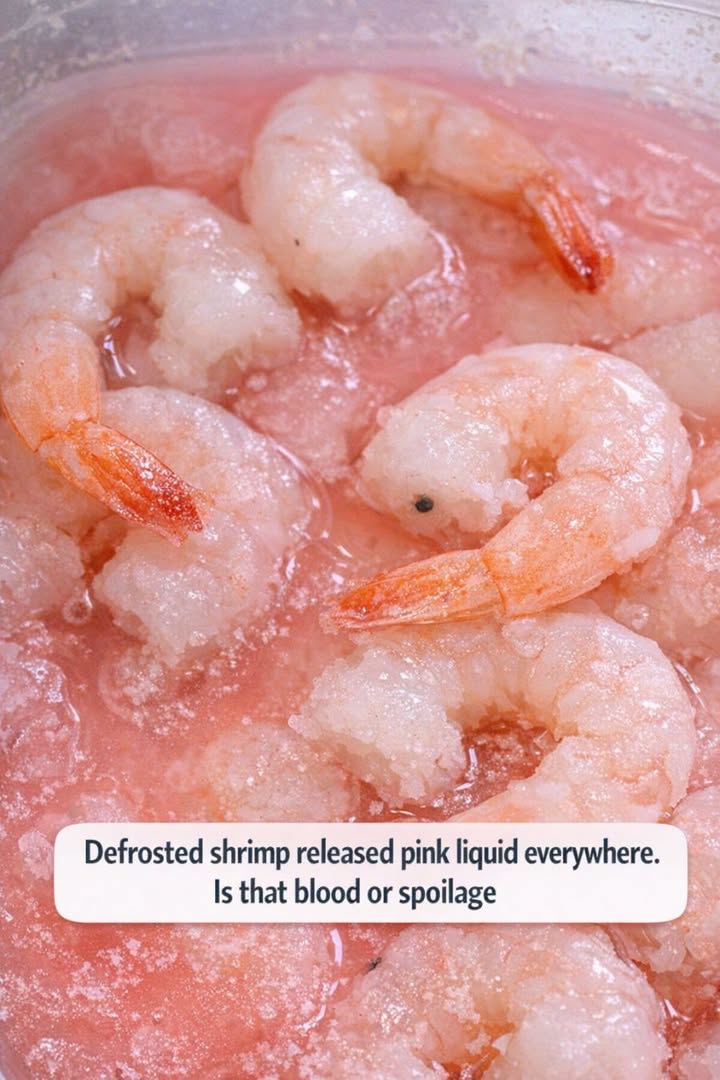
Pink or cloudy liquid can signal a food safety risk if accompanied by other spoilage signs. For instance, if the liquid has a sour smell, it might indicate bacterial growth.
It’s important to consider all factors together. If the shrimp looks, smells, and feels off, then the presence of pink or cloudy liquid is likely a red flag for spoilage.
7. The Role Of Freezer Burn, Ice Crystals, And Storage Time
Freezer burn occurs when food is improperly stored in the freezer, leading to dehydration and oxidation. This can cause shrimp to lose flavor and texture, and may result in excessive thaw drip.
Ice crystals form when shrimp are frozen, and the size of these crystals can increase with longer storage times. Larger ice crystals are more likely to damage the shrimp’s cell structure, leading to more water and pigments being released during thawing.
8. How To Properly Thaw Shrimp To Reduce Mess And Quality Loss
Proper thawing methods can reduce thaw drip and help maintain shrimp quality. The best way to thaw shrimp is to place them in a colander under cold running water or in the refrigerator overnight.
Thawing in the refrigerator allows the shrimp to defrost slowly, which minimizes cell wall rupture and subsequent pigment loss. Avoid using hot water or leaving shrimp out at room temperature, as these methods can promote bacterial growth and spoilage.
9. Safe Handling And Cooking Practices After Defrosting
After defrosting, it’s essential to handle shrimp properly to prevent contamination. Always wash your hands and surfaces that come into contact with raw shrimp. Cook shrimp to an internal temperature of 145°F (63°C) to ensure safety.
Proper cooking not only ensures safety but also enhances flavor and texture, making the shrimp more enjoyable to eat.
10. When To Toss Your Shrimp And When It’s Still Safe To Eat
If shrimp shows signs of spoilage, such as a strong smell, slimy texture, or unusual color, it’s best to err on the side of caution and discard them. Consuming spoiled shrimp can lead to foodborne illnesses.
However, if the shrimp looks and smells fresh, and the only concern is the pink liquid, it’s likely safe to cook and eat. Trust your senses and use good judgment when assessing seafood quality.