

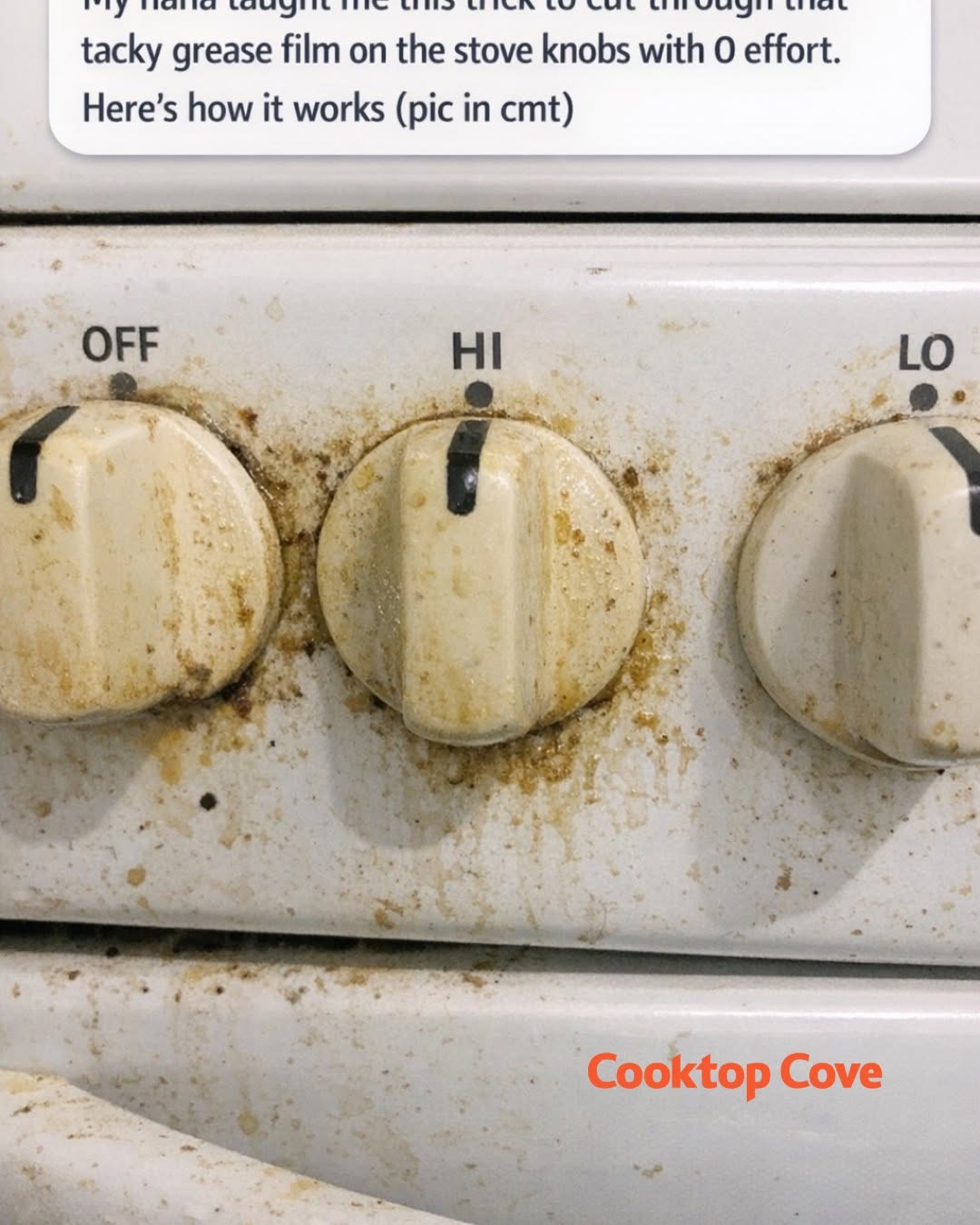
My nana taught me this trick to cut through that tacky grease film on the stove knobs with 0 effort. Here’s how it works
There’s a particular kind of kitchen grime that seems to laugh at a sponge: that sticky, yellowed grease film that settles on stove knobs. It isn’t just dust, and it isn’t just oil. It’s that cooked-on, hand-touched, dinner-after-dinner buildup that turns a perfectly good knob tacky to the touch. I’ve been cooking long enough to know that if you ignore it for even a few weeks, it starts hanging on like old varnish. The good news is that the little trick my nana showed me years ago still works beautifully, and it doesn’t require hard scrubbing or a cabinet full of specialty cleaners.
My nana was the sort of woman who kept a pie cooling on the counter and a coffee can of cleaning odds and ends under the sink. She believed most kitchen messes could be handled with common sense, hot water, and patience. Her stove-knob trick is exactly that kind of wisdom: simple, cheap, and effective. I’ll walk you through exactly what I do, how long I let it sit, what to use on plastic versus metal, and a few mistakes to avoid so you can get those knobs clean with next to no effort.
1. What makes stove knobs feel so tacky in the first place
That film is usually a mix of aerosolized cooking grease, steam, dust, and the natural oils from our hands. Every time bacon pops, onions sauté, or a skillet runs a little hot, microscopic grease lands on the front of the stove. Then we turn the burner on and off with flour on our fingers, butter on our hands, or a little spaghetti sauce on a knuckle. Over time, all of that gets pressed into the knob surface.
On most stoves, the knobs sit right where warm air rises. Heat softens the grease just enough to help it cling, and once dust sticks to it, you get that gummy, dull-looking coat that plain wiping won’t remove. That’s why a quick swipe with a dry cloth usually just smears it around.
2. Nana’s low-effort trick in one sentence
The trick is to remove the knobs, soak them in very warm water with dish soap for 20 to 30 minutes, then wipe away the loosened grease with a soft cloth or old toothbrush. That’s it. The “0 effort” part comes from letting the soak do the heavy lifting before your hands do a thing.
Nana always said, “Don’t scrub first—soften first.” She was right. Grease that feels stubborn when dry often slides right off after a good soak in hot, soapy water.
3. The exact supplies I use
You do not need anything fancy. I use a medium bowl, small dishpan, or the kitchen sink stopper basin; 1 to 2 teaspoons of grease-cutting dish soap; and about 6 to 8 cups of very warm water. If the knobs are especially grimy, I sometimes add another teaspoon of soap.
For wiping, I like a soft dishcloth, a microfiber cloth, or an old toothbrush with soft bristles. I also keep a dry towel nearby for setting the knobs out afterward. If I’m cleaning around the stove face too, I use 1 extra damp cloth and 1 dry one.