

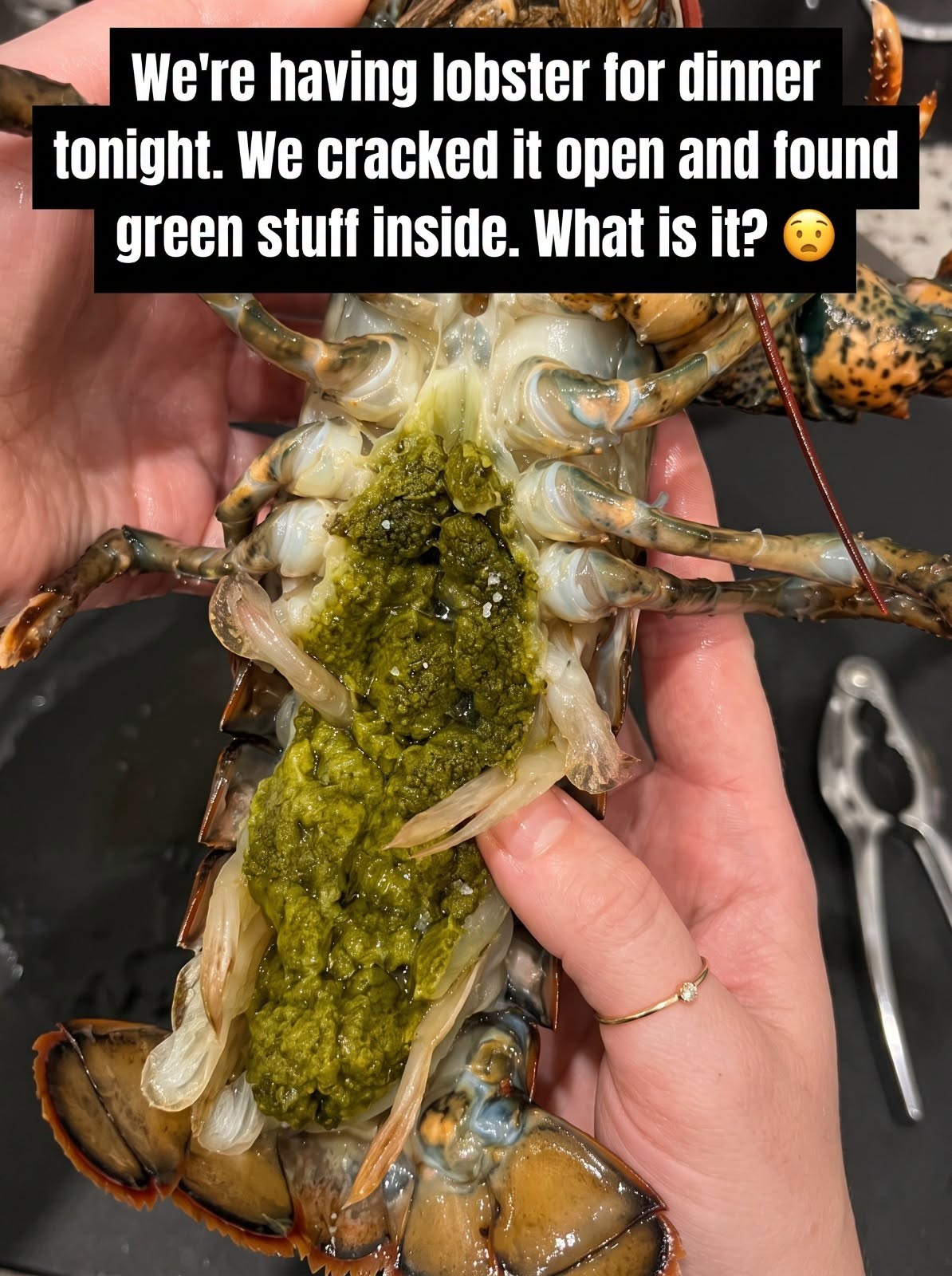
That green substance is commonly called tomalley.
Tomalley is essentially the lobster’s digestive gland, known scientifically as the hepatopancreas. It performs several important functions, including helping with digestion and nutrient storage.
Think of it as a combination of organs that helps the lobster process the food it eats.
And yes, its color can be surprisingly intense!
Depending on the lobster, its diet, maturity, and other factors, tomalley may appear:
- Green
- Olive green
- Yellow-green
- Brownish green
- Creamy or slightly gray-green
Its texture can also vary. Sometimes it is smooth and buttery, while other times it may be softer or grainier.
That variation is completely normal.
Why Does Lobster Tomalley Look Green?
This is where things get especially interesting.
The color isn’t simply because the lobster has a preference for green food. Tomalley contains pigments and digestive materials associated with the lobster’s diet and digestive processes.
Lobsters are scavengers and opportunistic feeders. Their diets can include fish, mollusks, crustaceans, worms, and other marine organisms.
As food is digested and processed, pigments and other compounds contribute to the distinctive appearance of the tomalley.
So when you open a lobster and see that bright green center, you’re looking at a little snapshot of the animal’s digestive system.
Nature really does have some unusual designs!
Is Tomalley the Same Thing as Lobster Roe?
Continue reading on the next page →